

The short version: If you want to age powerfully as a woman, two things belong at the very bottom of the pyramid, under every peptide, serum, and biohack you have ever been sold: eat enough protein, and take creatine. They are the most researched, most underrated, most skipped tools in women's health. Here is exactly why they matter, how much you actually need, and how I use them every single day.
I spend my whole career deep in longevity and peptides. I have tried the advanced stuff. And the two things that move the needle most for the women I work with are the two things almost none of them are doing consistently.
Here is the truth no one wants to say out loud. We have been taught to shrink. To under-eat. To fear "bulking up." To chase the next shiny supplement while the foundation crumbles underneath us. And the foundation, protein and creatine, is exactly where longevity is built.
You are not a smaller man. You are not too young to start. Let's fix this today.
Part One: Protein, the Nutrient Most Women Are Quietly Missing
Why most women aren't eating enough protein
Most women are not eating enough protein. Not close.
The official RDA is about 0.8 grams per kilogram of body weight, roughly 46 grams a day for the average woman. Here is the problem. That number was never meant to help you thrive. It is the bare minimum to keep an average, sedentary person out of deficiency. It is the floor, not the goal. And even against that low bar we fall short. Around one third of adults over 50 do not hit even the RDA, and a real chunk of older women fall below the amount their bodies actually need.
Now think about what we are asking our bodies to do. Build muscle. Recover. Carry and feed babies. Protect our bones. Hold onto strength for 40 more years. That floor is nowhere near enough.
How much protein should women actually eat?
Forget the RDA. The target I actually use with women is simple: about 1 gram of protein per pound of your ideal body weight, every day. For most women that lands somewhere around 120 to 150 grams a day. It sounds like a lot when you are used to a yogurt-and-salad kind of day, but that is the amount that genuinely protects your muscle, metabolism, and strength as you age.
But it is not just how much. It is how you spread it. Your body builds muscle best when you hit a real threshold at each meal. The research says you need roughly 25 to 30 grams of quality protein per meal just to switch on muscle protein synthesis, the process that turns the food you eat into actual muscle. My coaching number is a little higher: aim for 30 to 40 grams per meal. Below that you are maintaining. At or above it, you are building.
What protein does for women, mothers, and longevity
This is where it gets good, because protein is not about "toning up."
Muscle is your longevity organ. How much lean muscle you carry is one of the strongest predictors of how well you age. Muscle runs your metabolism, stores blood sugar (huge for hormones), and keeps you strong and independent for decades. We start losing it in our 30s, faster through menopause. Protein is the raw material that fights back. You cannot out-train an under-fueled body, and you cannot shrink your way to strong.
It protects your bones. Muscle and bone talk to each other. Enough protein supports bone density, which matters enormously for women.
It steadies your energy, hormones, and appetite. Protein is the most filling macronutrient. It blunts blood sugar spikes and calms the hunger signals that feel so out of control in perimenopause.
It is non-negotiable for mothers. Pregnancy, birth, and postpartum are enormous physical demands. Your protein needs go up while trying to conceive, pregnant, and breastfeeding, and that is exactly when most women are too depleted to eat with intention. I am at the start of my own preconception journey, and protein is front and center for me.
Complete vs incomplete protein: the amino acid basics
When you eat protein, your body breaks it into amino acids, the building blocks it rebuilds into muscle, hormones, and tissue. There are 20 amino acids, and 9 are "essential," meaning your body cannot make them. They have to come from food.
One matters most: leucine. Leucine is the trigger that flips on muscle building, and you want roughly 2.5 to 3 grams of it per meal. That is another reason the per-meal target matters.
A protein is "complete" when it has all 9 essentials in real amounts.
- Animal proteins (eggs, fish, poultry, beef, Greek yogurt) are complete and naturally high in leucine. That is why they are so effective.
- Most single plant proteins are incomplete on their own, just a little low in one or more essentials. Peas run low in methionine. Rice runs low in lysine.
- The fix is simple: combine them. A pea-and-rice blend covers one plant's gap with the other's strength, which is why a well-built plant protein can be complete.
Whole food comes first: eggs, fish, quality meat and poultry, Greek yogurt, cottage cheese, lentils, tofu. But real life is busy, and that is where a clean protein powder earns its place.
Protein powder vs collagen vs amino acids: what's the difference?
This is the mix-up I see constantly, so let me untangle it. These three are not interchangeable.
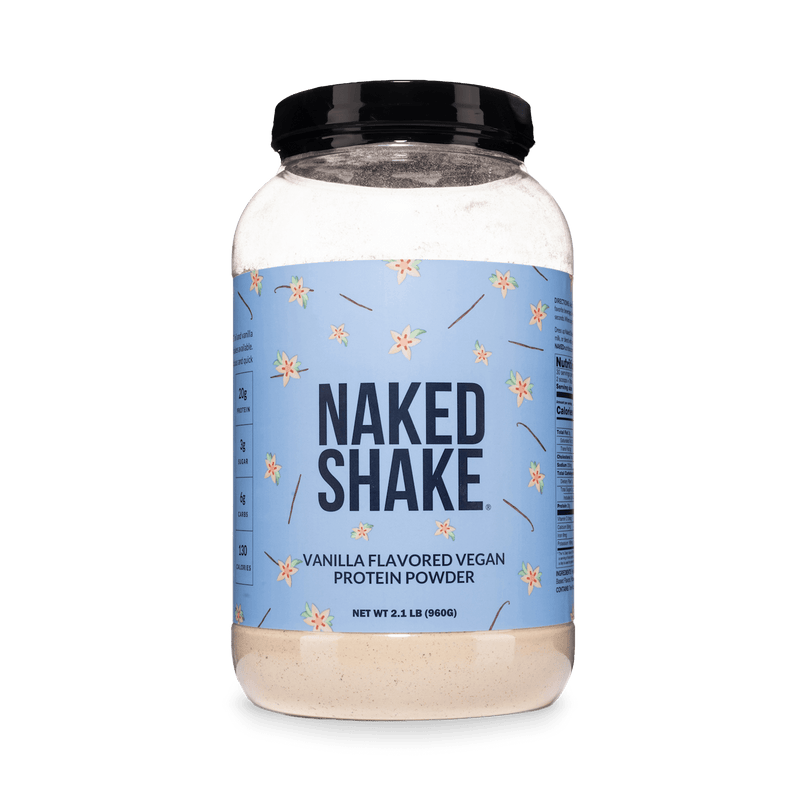
1. Protein powder gives you complete, whole protein, all the aminos in a real dose (usually 20 grams or more per scoop). This is your workhorse for hitting your daily target and building muscle. The only two things I care about when choosing one: a clean ingredient list (no artificial sweeteners or fillers) and a complete amino profile. That is genuinely why I use the Naked Shake Vanilla Vegan Protein. It is a simple pea-and-rice blend, so it is complete, without the junk most powders hide behind. It lives in my morning coffee, and I am honestly always almost out.
2. Amino acids (EAAs or BCAAs) are the building blocks on their own, no whole protein attached. EAAs can nudge muscle building in small doses, useful if you train fasted or have low appetite. But they are a supplement to a protein-rich diet, not a replacement for it. And BCAAs alone are not enough to build muscle, no matter the marketing. For everyday use, whole protein wins.
3. Collagen is where the biggest confusion lives, so hear me: collagen is not a complete protein, and it should not count as your muscle protein. It is missing tryptophan entirely and is low in the essentials (including leucine) that build muscle. What it is rich in, glycine and proline, is wonderful for skin, hair, nails, joints, and gut. So I love collagen for its own job. Just do not sip it in your coffee and count it as your protein for the morning, because you are leaving the muscle-building aminos on the table.
The simple hierarchy: whole food first, a clean complete protein powder to fill the gaps, collagen as a targeted add-on for skin and joints, EAAs only if you have a specific reason.
Part Two: Creatine, the Most Studied Supplement in the World (That Women Are Told to Fear)
Now the one I genuinely wish I had started years ago.
Here is the fact that surprises everyone first: creatine is the most researched supplement on the planet. More than any pre-workout, any fat burner, any trendy longevity molecule, more even than protein. Hundreds of studies. Decades of data. An excellent safety record. And most of that research was done on men, which is a big reason women got left out of the conversation.
Is creatine safe for women? (And no, it will not make you bulky)
Creatine is not a steroid and not a hormone. It is a compound your body already makes and stores in your muscles, and you also get it from red meat and fish. Its whole job is energy.
The mechanism is beautifully simple. Your cells run on ATP, your energy currency. About two thirds of the creatine in your muscle is stored as phosphocreatine, a rapid-recharge system that regenerates ATP almost instantly so your muscles can keep firing during hard efforts. More creatine in the tank means more available energy, for your muscles and, as you will see, your brain. Any early scale bump is just a little water pulled into the muscle, which is a good thing.
Why women need creatine even more than men
Here is what stops women in their tracks: research shows women carry roughly 70 to 80 percent lower creatine stores than men, and we eat far less of it from food, especially if we eat little red meat. We start from a much lower baseline, which means many of us stand to benefit more from supplementing, not less.
What creatine does: muscle, brain, mood, and energy
Muscle and strength. Paired with lifting, creatine consistently helps women build strength and lean muscle, and studies in women show real gains in strength and power. For a woman in or past menopause, creatine plus resistance training is one of the most protective things she can do for muscle and bone.
Energy. Because creatine is all about regenerating ATP, many women feel steadier training energy and can simply do more before they gas out.
And the one nobody talks about: your brain. Your brain runs on the same creatine energy system your muscles do, and women carry lower creatine in the frontal lobe, the region tied to mood and focus. Research shows benefits for memory, mental clarity, and reaction time, especially under stress and sleep deprivation. (Every tired mom just sat up.) There is also genuinely exciting research on creatine and mood, including studies where it improved depression symptoms, and one where creatine alongside an antidepressant produced a 56 percent greater drop in depression scores over 8 weeks.
Creatine during pregnancy and postpartum (and why I wish I'd taken it sooner)
This is the piece closest to my heart, so let me be clear about where I stand: I recommend creatine through pregnancy and postpartum, and I genuinely wish I had taken it during my first.
Here is the why. During pregnancy, a woman's creatine levels drop, especially in the first half, because your growing baby draws on that same energy system. Observational research links lower maternal creatine to reduced fetal growth, and animal studies look genuinely promising for protecting a baby's brain through the stress of birth. Your body and brain are under an enormous energy load in this season, and that is exactly what creatine is built to support.
And postpartum? This is where I feel it most. You are running on broken sleep and pouring everything you have into a new baby, and creatine's benefits for brain energy, mental clarity, and mood are exactly what that season demands. The formal research on the pregnancy window is still catching up to what already makes complete mechanistic sense, but for the brain and energy support alone, creatine is one of the first things I would put back in if I were doing my first pregnancy over again. Keep your own provider in the loop, of course, but this is a supplement I stand behind for mamas.
How to take creatine (and protein) every day
Creatine could not be simpler.
- 3 to 5 grams a day of creatine monohydrate. That is it. Monohydrate is the most studied, most proven, most affordable form. Do not pay extra for fancy versions.
- You do not need to load. The old 20-grams-for-a-week loading trick works faster but is not necessary. Five grams daily saturates your muscles within a few weeks just the same.
- Timing does not matter. Consistency does. Pick a moment you will remember.
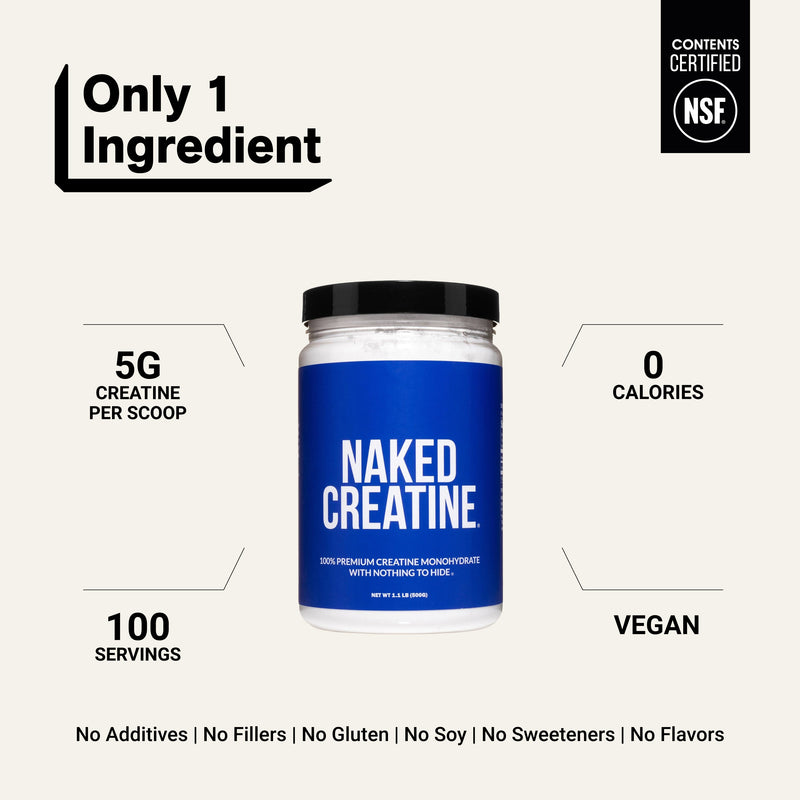
- Buy pure, single-ingredient creatine. That is exactly why I use Naked Creatine, just micronized creatine monohydrate, nothing else.
My Simple Daily Routine
Mine is genuinely this basic. Most mornings, a scoop of Naked Shake blended into my coffee or a smoothie, and 5 grams of Naked Creatine stirred into water. Then I build the rest of the day around real meals, aiming for 30 to 40 grams of protein at each one. Two tiny, consistent habits. Nothing extreme. And the return, for my muscle, metabolism, brain, and healthspan, is bigger than almost anything else in my cabinet.
If you take one thing from this: you are probably not eating enough protein, and you are probably not taking creatine, and both are fixable today. You do not have to earn strength or wait until you are "advanced." The foundation is the strategy. I just wish someone had told me sooner.
FAQ: Protein and Creatine for Women
Is creatine safe for women?
Yes. Creatine is the most researched supplement available, with a strong safety record in healthy adults. It is not a steroid or a hormone. As always, check with your provider if you are pregnant, breastfeeding, or managing a health condition.
Will creatine make me bulky?
No. Creatine helps you build lean strength, not bulk. Any early weight change is usually a small amount of water drawn into the muscle, which actually supports muscle function.
How much protein do women need to build muscle?
Aim for about 1 gram of protein per pound of your ideal body weight per day, spread across your meals. Landing 30 to 40 grams of quality protein per meal is what triggers muscle building.
Can I take creatine and protein together?
Yes. They do different jobs (protein builds, creatine fuels) and work well together. I take both every morning.
Is collagen the same as protein powder?
No. Collagen is not a complete protein and is low in the amino acids that build muscle. It is great for skin, hair, nails, and joints, but it should not replace your protein powder.
Start With the Foundation
You have one job right now: build the woman you will be at 70. Protein and creatine are the least glamorous, most powerful place to start.